Free shipping on orders over $399


The Spiritual Philosophy Behind Thangka Art — Understanding Buddhist

AestheticsIntroductionThangka painting is not simply an artistic expression but a systematic embodiment of Buddhist philosophical principles. Every brushstroke, every color, and every proportion within a Thangka reflects centuries of meditative inquiry and spiritual realization. Understanding the philosophical foundations of Thangka allows viewers to appreciate these works not merely as aesthetic objects but as gateways into the profound teachings of Tibetan Buddhism.The Concept of Impermanence in ThangkaCentral to Buddhist philosophy is the doctrine of impermanence — the understanding that all conditioned phenomena are in constant flux and ultimately devoid of independent self-nature. Remarkably, Thangka art grapples with this very paradox. While created as durable objects meant to endure for centuries, Thangka simultaneously depicts the impermanent nature of all phenomena. The radiant deities shown in Thangka are not eternal beings dwelling in some heavenly realm; rather, they represent the potential for enlightenment inherent within all sentient beings.This philosophical tension gives Thangka its distinctive spiritual urgency. Practitioners do not worship the depicted deities as external entities but rather recognize them as reflections of their own Buddha nature. The Thangka functions as a mirror through which the viewer can glimpse and cultivate awakened qualities of mind.Tantric Visualization and Sacred GeographyThangka serves a crucial function within Tantric or Vajrayana Buddhism as a support for meditative practice. Advanced practitioners use Thangka as visualization aids during complex deity yoga practices. When a meditator recites specific mantras while focusing on a Thangka, they progressively invoke the presence of the depicted deity, transforming ordinary consciousness into the wisdom body of the Buddha.The elaborate landscapes, palaces, and celestial realms depicted in Thangka represent the mandala — a sacred geographic and cosmic mapping of the enlightened mind. Each direction, each figure, each symbolic object corresponds to aspects of the tantric teachings regarding the nature of reality. Through sustained meditation with Thangka, practitioners aim to internalize these symbolic structures, ultimately realizing that the external mandala and the internal mind are non-dual.Ethics and Aesthetics: The Moral Dimensions of ThangkaTibetan Buddhist ethics profoundly shape the creation and use of Thangka. The selection of materials, the conduct of the artist, and the intention behind creating or viewing Thangka all carry moral weight. Traditional guidelines stipulate that Thangka artists should maintain ethical conduct, observe Buddhist precepts, and cultivate bodhicitta — the aspiration to attain enlightenment for the benefit of all beings.
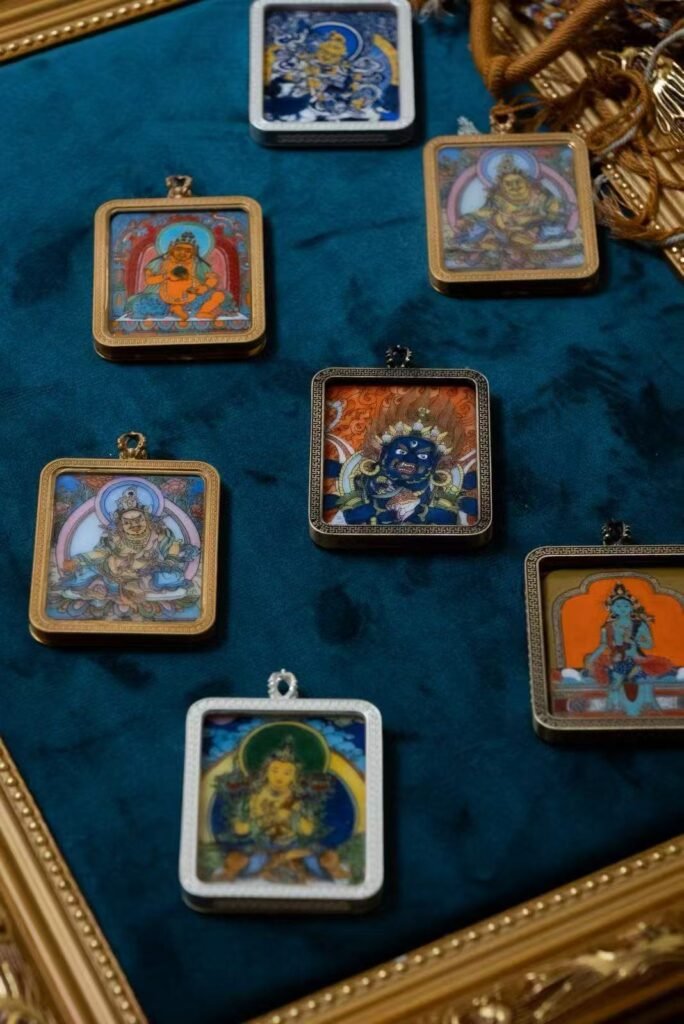
The aesthetic experience of Thangka is thus inseparable from its ethical dimension. Beauty in Thangka is not mere visual appeal but a manifestation of moral qualities — compassion expressed through gentle forms, wisdom conveyed through serene countenances, and emptiness embodied in the delicate interplay of form and space. This integration of ethics and aesthetics reflects the Buddhist understanding that right conduct and right view are essential to the path of liberation.Contemporary Interpretations and Cultural DialogueIn the modern era, Thangka has become a subject of cross-cultural dialogue and academic inquiry. Scholars from diverse backgrounds study Thangka not only as religious artifacts but as complex philosophical texts encoded in visual form. This scholarly engagement has deepened public understanding of Thangka's significance while also raising important questions about cultural representation and appropriation.Within China, efforts to preserve and promote Thangka reflect broader cultural policies aimed at safeguarding ethnic minority heritage. Tibetan Buddhist monasteries continue to produce traditional Thangka while also engaging with contemporary artistic movements. This dynamic interplay between tradition and innovation ensures that Thangka remains a vibrant and relevant art form.ConclusionThe philosophical depth of Thangka transforms it from a mere painting into a comprehensive teaching instrument. Through its intricate symbolism, its meditative function, and its ethical foundations, Thangka offers a window into the profound spiritual landscape of Tibetan Buddhism. For those who approach it with openness and respect, Thangka provides not only aesthetic pleasure but also a pathway to deeper understanding of the nature of mind and reality.