Free shipping on orders over $999. Only Email is live.

The History and Origins of Thangka

Thangka, also spelled Tangka or Thanka, is a traditional Tibetan Buddhist scroll painting that has been practiced for over 2,000 years. The word “thangka” derives from the Tibetan term thang yig, meaning “a record that can be unrolled,” reflecting the painting’s portable nature designed for transport and religious devotion.
The origins of thangka painting are deeply rooted in the cultural and spiritual landscape of Tibet, emerging alongside the spread of Buddhism into the Himalayan region around the 7th century. Early Buddhist teachings were primarily transmitted orally, and visual aids became essential tools for practitioners. Monks and artists began creating paintings that depicted deities, mandalas, and Buddhist narratives, transforming abstract spiritual concepts into tangible visual forms.
The art form evolved through several distinct periods. The protohistoric period saw the development of early painting styles influenced by neighboring traditions, including Newari art from Nepal and Buddhist traditions from Central Asia. By the 11th to 15th centuries, regional schools emerged, notably theMenri and Khara lineages, each developing distinctive stylistic approaches and iconographic conventions.
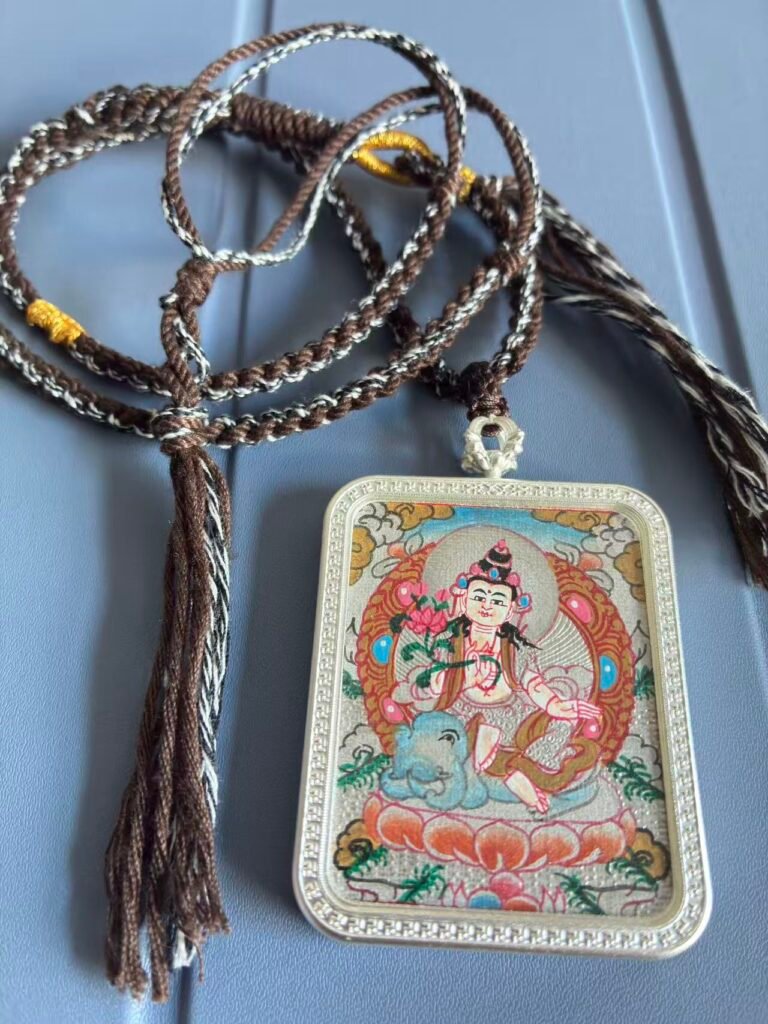
The renowned explorer and scholar Giuseppe Tucci, who conducted extensive expeditions to Tibet during the early 20th century, documented and collected numerous thangkas, bringing international attention to this sacred art form. His expeditions revealed the remarkable diversity and sophistication of thangka painting across different monasteries and traditions.
Traditional thangka painting serves multiple purposes: as meditation aids for practitioners, teaching tools for conveying Buddhist philosophy, and objects of devotion offered in shrines and temples. The paintings typically depict Buddhist deities, protector figures, mandalas, and scenes from the life of the Buddha, each rendered according to strict iconometric proportions established by centuries of tradition.
Today, thangka painting continues as both a living religious practice and a celebrated art form, with master artists preserving ancient techniques while adapting to contemporary contexts. Its rich history reflects the broader story of Tibetan Buddhism and its remarkable capacity to translate profound spiritual truths into extraordinary visual expressions.