Free shipping on orders over $999. Only Email is live.


Thangka Influence on Western Esoteric Art — Beyond the Himalayas

Author: Xuan Kong Zi (炫空子)
When Helena Blavatsky founded the Theosophical Society in 1875, she wasn’t just importing Eastern philosophy — she was importing Tibetan Buddhist visual culture, including thangka imagery that had never been seen in Western salons.
This cross-cultural transmission deserves more attention.
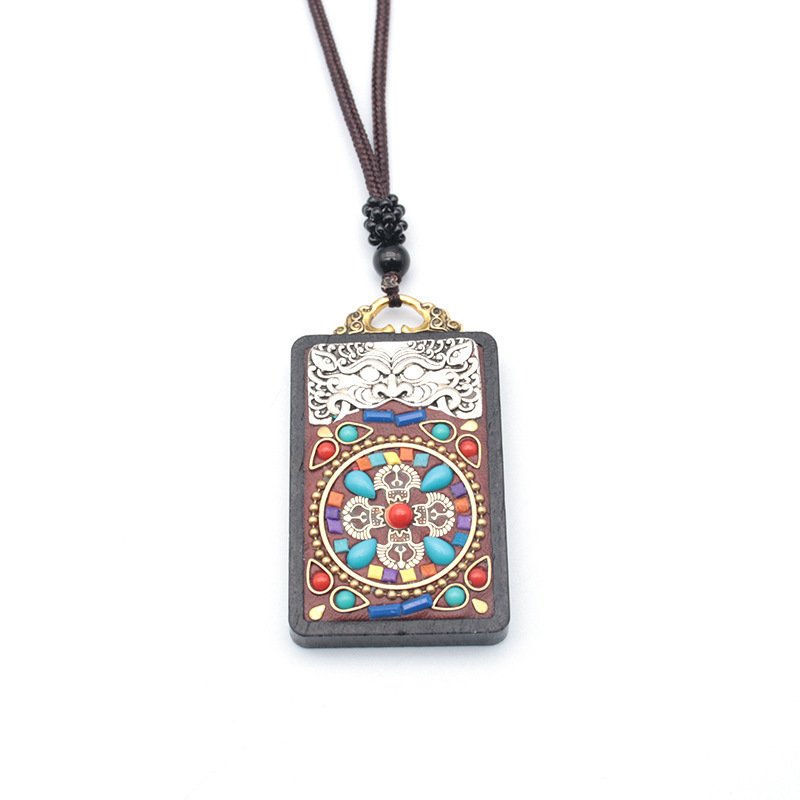
The Theosophy connection is direct. Blavatsky studied in Tibet (or claimed to), and early Theosophical publications featured mandala illustrations and deity imagery drawn from thangka traditions — often interpreted through a heavily Westernized lens. The geometric mandala became a symbol of universal spiritual structure in Theosophical circles.
The Arts and Crafts movement absorbed thangka influences too. William Morris and his contemporaries were fascinated by non-Western geometric textile patterns. While direct attribution is debated, the flowing symmetry of some thangka border designs shares DNA with Art Nouveau decorative arts.
The Symbolist painters — Kandinsky, Kupka, Mondrian — were explicitly inspired by theoosphical mandala imagery. Kandinsky’s famous essay “Concerning the Spiritual in Art” (1911) references Eastern geometric spirituality as a model for Western abstraction. The path from a 15th-century Tibetan Chakrasambhara mandala to Mondrian’s Composition in Red, Blue, and Yellow is traceable.
Today, this influence has come full circle. Contemporary Western artists producing “neo-mandalas” and “fusion thangka” draw on Tibetan visual language, often without acknowledging the source tradition — a dynamic that raises legitimate questions about cultural appropriation versus appreciation.
Understanding thangka’s influence on Western art history gives us a richer picture: this is not an isolated Himalayan tradition, but a visual language that shaped global aesthetics in ways most people don’t realize.