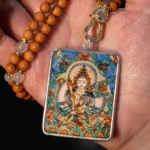
Free shipping on orders over $999. Only Email is live.

Thangka as a Portable Sacred Image in Tibetan Buddhism

A thangka (also spelled tangka) is a Tibetan Buddhist hanging scroll—most commonly a painting on cloth—designed to be displayed, rolled, carried, and shown again in another place. This portability matters: thangkas belong to lived religious practice, not only to permanent walls. In monasteries, homes, and teaching settings, the image can be hung for ritual, instruction, and contemplation, then stored safely by rolling it, which suits the realities of travel and climate in the Himalayan region.
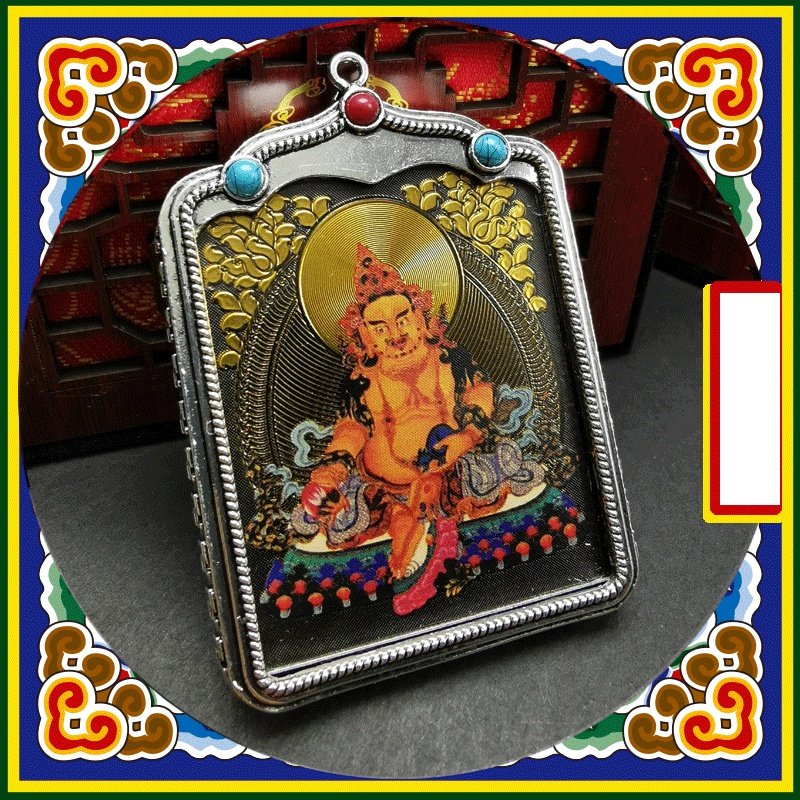
The format is distinctive. A thangka is usually painted on cotton and then mounted in a silk brocade surround that frames the central image and gives it presence as an object of devotion.rubinmuseum.org This textile architecture is not mere decoration; it signals that the picture is also a sacred implement. The cloth support, brocade mount, and hanging rods together turn the painting into a functional scroll—something closer to a shrine image than a gallery canvas.
Thangkas tend to depict Buddhist deities, lineage teachers, narratives, mandalas, and protective figures. What makes a thangka different from “illustration” is the way iconography is meant to be used: the image is a structured support for memory, visualization, and teaching. In other words, it is not simply about a deity; it helps practitioners learn how to “see” a deity in a disciplined way, guided by tradition and teacher-to-student transmission.
That disciplined approach is also visible in the making. Thangka painting is described as process-oriented and rigorous, involving multiple precise steps rather than spontaneous sketching.rubinmuseum.org Artists work within established conventions for composition and proportion so that the figure’s posture, hand gestures, attributes (like ritual implements), and surrounding symbolism communicate specific meanings to trained viewers. The result is a kind of visual language: once you know its grammar, a thangka can “speak” complex ideas about compassion, wisdom, protection, death, or the path to awakening.
Because thangkas sit at the intersection of art and practice, they also raise questions for modern viewers. When a thangka enters a museum, it can be admired for color, line, and craftsmanship, yet its original life was often in ritual contexts—hung on a special day, used in ceremony, or unfurled for teaching. Understanding that dual identity helps avoid a common misunderstanding: treating the image as purely decorative. The scroll format, the brocade mount, and the careful iconography are clues that the object was designed to function—religiously, socially, and pedagogically—over time.