Free shipping on orders over $999. Only Email is live.


Thangka Artisans — The Masters Who Preserve a Millennium-Old

TraditionIntroductionBehind every magnificent Thangka stands a master artisan who has devoted decades — often an entire lifetime — to perfecting this sacred art form. These artists, known in Tibetan as Lhitsa or master painters, undergo rigorous training to acquire the technical skills, iconographic knowledge, and spiritual qualifications necessary for creating authentic Thangka. Their work represents a living bridge between ancient tradition and contemporary preservation efforts, ensuring that this precious heritage continues to inspire future generations.The Apprenticeship JourneyThe path to becoming a Thangka master is demanding and begins at a young age. Traditional training typically occurs within monastic settings or family lineages, where young apprentices study under established masters for periods ranging from five to fifteen years or even longer. During this intensive apprenticeship, students learn to prepare canvases, grind pigments, mix colors, and most importantly, internalize the complex proportional systems that govern Thangka composition.The proportional guidelines, derived from classical texts such as the Ich Cupai, are based on measurements of the Buddha's body as described in Buddhist scriptures. These measurements are not arbitrary but represent the proportions of an enlightened being — a physical manifestation of spiritual perfection. Mastering these proportions requires years of practice, as students must develop both intellectual understanding and muscular memory to paint accurate figures consistently.Daily Practice and Spiritual Discipline
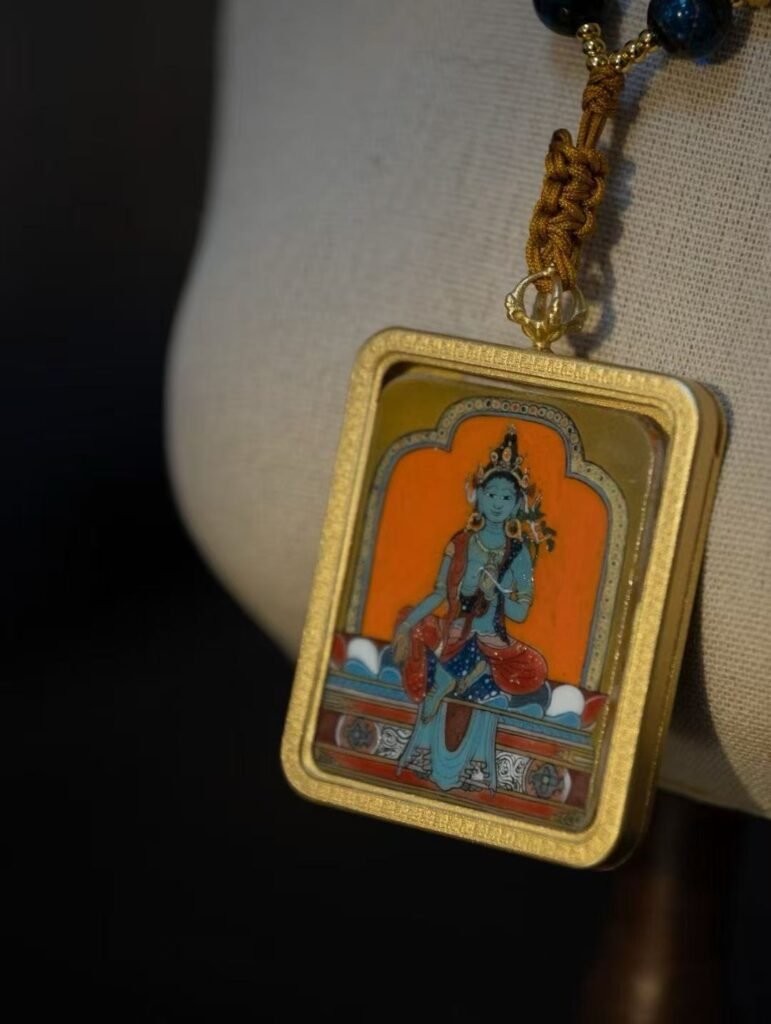
Beyond technical training, Thangka artisans adhere to strict spiritual disciplines. Many artists begin each day with meditation and prayer, dedicating their work to the benefit of all sentient beings. Some follow vegetarian diets, abstain from alcohol, and observe other ethical precepts designed to purify the mind and cultivate wholesome qualities. This spiritual dimension is considered essential — a Thangka painted with a distracted or ethically compromised mind is believed to lack the spiritual power necessary for its sacred function.The actual painting process is meditative in itself. Artists work in focused silence, often listening to recorded Buddhist teachings or mantras while applying pigments. This mindful approach transforms what could be merely technical work into a form of spiritual practice. Each brushstroke is performed with the intention of generating merit and contributing to the preservation of Buddhist teachings.Regional Schools and Distinctive StylesVarious regional traditions have developed within Thangka painting, each with unique characteristics. The Khyenri school, originating from the eastern Tibetan region, is known for its naturalistic rendering of landscapes and elaborate background scenes. The Menri school, associated with the Pheme and Mindroling monasteries, emphasizes clarity of iconography and balanced compositions. The Karma Gadri school, centered in eastern Tibet, is recognized for its rich color palette and distinctive portrayal of deities.In China, significant Thangka traditions exist in Qinghai's Rebgong region, Gansu's Labrang Monastery, and Sichuan's Derge and Kandze areas. Each region has developed distinctive stylistic features influenced by local aesthetics, available materials, and regional interpretations of Buddhist teachings. This diversity within the Thangka tradition reflects the adaptability and vitality of the art form.Challenges Facing Contemporary ArtisansToday, Thangka artisans confront numerous challenges. Economic pressures often force artists to compromise traditional methods — using synthetic pigments instead of natural ones, rushing the painting process, or focusing on commercial appeals rather than traditional aesthetics. The declining number of young people willing to undertake the lengthy training required for mastery threatens the continuity of this ancient tradition.Market demand has also created ethical concerns. The proliferation of mass-produced Thangka, often made by untrained artists in factories, has flooded the market with works of questionable authenticity and spiritual integrity. Discriminating between genuine handcrafted Thangka and commercial reproductions has become increasingly difficult for collectors and practitioners alike.Preservation Efforts and Future ProspectsDespite these challenges, encouraging developments offer hope for Thangka's future. Chinese government initiatives have established training centers and apprenticeship programs designed to transmit traditional skills to new generations. Cultural heritage projects have documented the techniques of master artisans, creating video archives and written records that preserve irreplaceable knowledge.Internationally, museums and academic institutions have partnered with Tibetan communities to support Thangka preservation. Exhibitions, publications, and scholarly research have raised public awareness of Thangka's cultural and artistic significance. These efforts, combined with the enduring devotion of practicing Buddhists who continue to commission and venerate Thangka, suggest that this sacred art form will continue to flourish.Conclusion
The artisans who create Thangka are the living custodians of a spiritual and artistic tradition that spans over a millennium. Their dedication, expertise, and devotion ensure that these sacred paintings continue to serve their traditional functions while also speaking to contemporary audiences. Supporting these master artisans — whether through patronage, education, or cultural appreciation — is essential for preserving the living heritage of Thangka for generations yet to come.