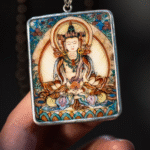
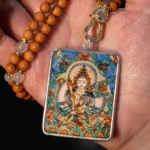
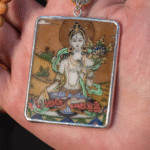
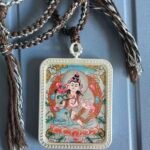
Free shipping on orders over $399

The Sacred Art of Thangka — A Window into Tibetan Buddhism

Thangka, also spelled Tangka or Tangka, is a traditional Tibetan Buddhist painting that serves as both a spiritual tool and a masterpiece of visual art. Derived from the Tibetan words thu (support) and kha (cloth), the term literally means “support on cloth,” referring to the canvas that forms the foundation of this intricate art form. For centuries, thangka has played a central role in the spiritual lives of Tibetan Buddhists, serving as objects of devotion, meditation aids, and visual narratives of sacred teachings.
The origins of thangka painting trace back to the 7th century CE, during the reign of King Songtsen Gampo, who introduced Buddhism to Tibet. However, it was not until the 11th to 12th centuries that thangka as we know it today began to take shape, influenced by Buddhist teachings arriving from India, Nepal, and Central Asia. Over time, Tibetan artists developed a distinctive style that blended these external influences with indigenous Tibetan aesthetic sensibilities, creating a unique artistic tradition unlike any other in the world.
Thangka serves multiple spiritual functions. Monks and practitioners use them as aids during meditation, focusing their attention on the deity or mandala depicted to cultivate specific qualities of mind. In monasteries, large thangka are unfurled during important festivals and ceremonies, allowing whole communities to engage with sacred imagery. Additionally, thangka functions as a visual encyclopedia, depicting complex Buddhist cosmology, the lives of enlightened beings, and the progression of spiritual practice.
The iconography of thangka is governed by precise artistic conventions laid out in classical texts known as pute (canons). Deities are depicted in specific poses (asanas) and hand gestures (mudras), with particular color schemes and symbolic attributes that communicate their identity and spiritual qualities. A well-trained thangka artist must memorize hundreds of such conventions before beginning to paint.
Today, thangka continues to be practiced throughout the Himalayan region, Nepal, Bhutan, and among Tibetan diaspora communities worldwide. Contemporary artists balance respect for ancient traditions with personal artistic expression, ensuring that this sacred art form remains a living tradition rather than a mere historical relic.