Free shipping on orders over $999. Only Email is live.

Hello thangka!

Welcome to thangka.app website. This is a wonderful place to enjoy thangka art and various products.
Thangka is what ?
A thangka painting is a Tibetan Buddhist painting on cotton, silk appliqué, usually depicting a Buddhist deity, scene, or mandala.
Thangkas are traditionally kept unframed and rolled up when not on display, mounted on a textile backing somewhat in the style of Chinese scroll paintings, with a further silk cover on the front.
So treated, thangkas can last a long time, but because of their delicate nature, they have to be kept in dry places where moisture will not affect the quality of the silk.
Most thangkas are relatively small, comparable in size to a western half-length portrait, but some are extremely large, several metres in each dimension; these were designed to be displayed, typically for very brief periods on a monastery wall, as part of religious festivals.
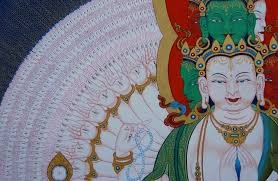
Most thangkas were intended for personal meditation or instruction of monastic students. They often have elaborate compositions including many very small figures. A central deity is often surrounded by other identified figures in a symmetrical composition. Narrative scenes are less common, but do appear.
Thangka serve as important teaching tools depicting the life of the Buddha, various influential lamas and other deities and bodhisattvas. One subject is the Wheel of Life (Bhavachakra), which is a visual representation of the Abhidharma teachings (Art of Enlightenment). The term may sometimes be used of works in other media than painting, including reliefs in metal and woodblock prints. Today, printed reproductions at poster size of painted thangka are commonly used for devotional as well as decorative purposes. Many thangkas were produced in sets, though they have often subsequently become separated.
How thangka is now?
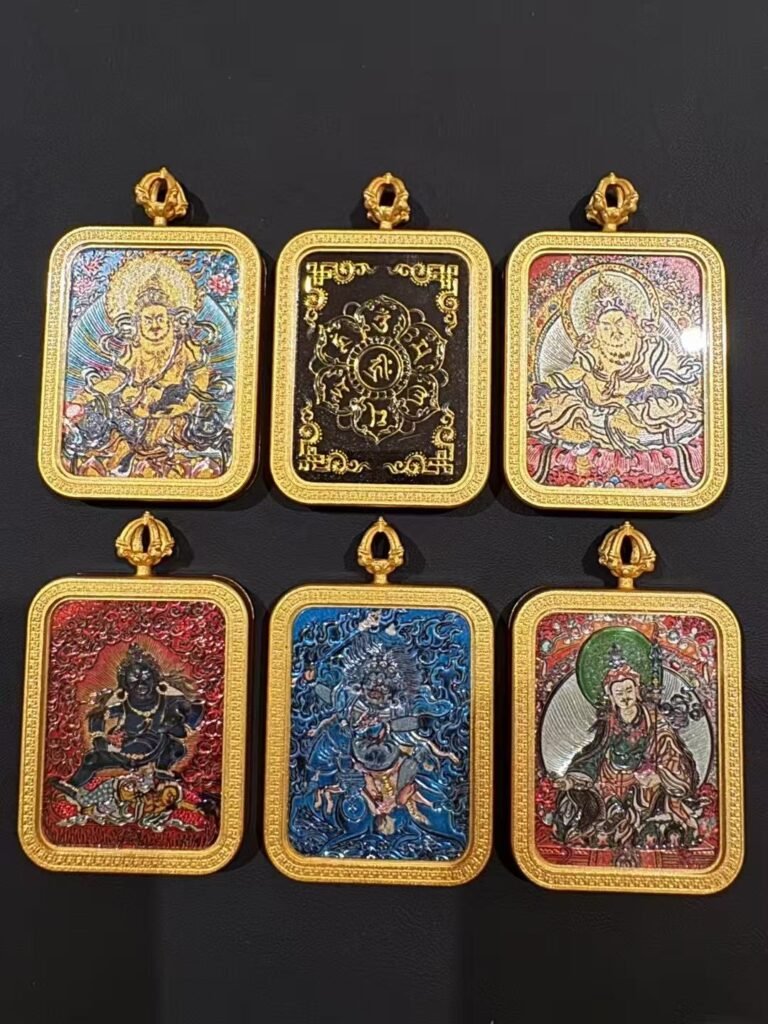
With the development of thangka art ,nowadays,thangkas are made of ceramic thangka and metal engraved thangka.
Ceramic Thangka (Ceramic Thangka Art)
Ceramic Thangka is a contemporary artistic form that transforms traditional Tibetan Thangka painting into a durable, three-dimensional ceramic medium. Artists use high-temperature porcelain, clay relief techniques, and glazed color layering to reinterpret the sacred imagery of Tibetan Buddhism—such as deities, mandalas, and auspicious symbols.
Unlike traditional painted Thangkas on cloth, Ceramic Thangkas emphasize texture, depth, and permanence. Relief carving, molded details, and multiple firings give the artwork a sculptural quality, while mineral glazes provide vivid, long-lasting colors. This fusion of ancient Thangka iconography with ceramic craftsmanship creates an art form that is both spiritually symbolic and visually modern.
Ceramic Thangkas are valued for their durability, refined craftsmanship, and suitability for architectural spaces, temples, galleries, and private collections.
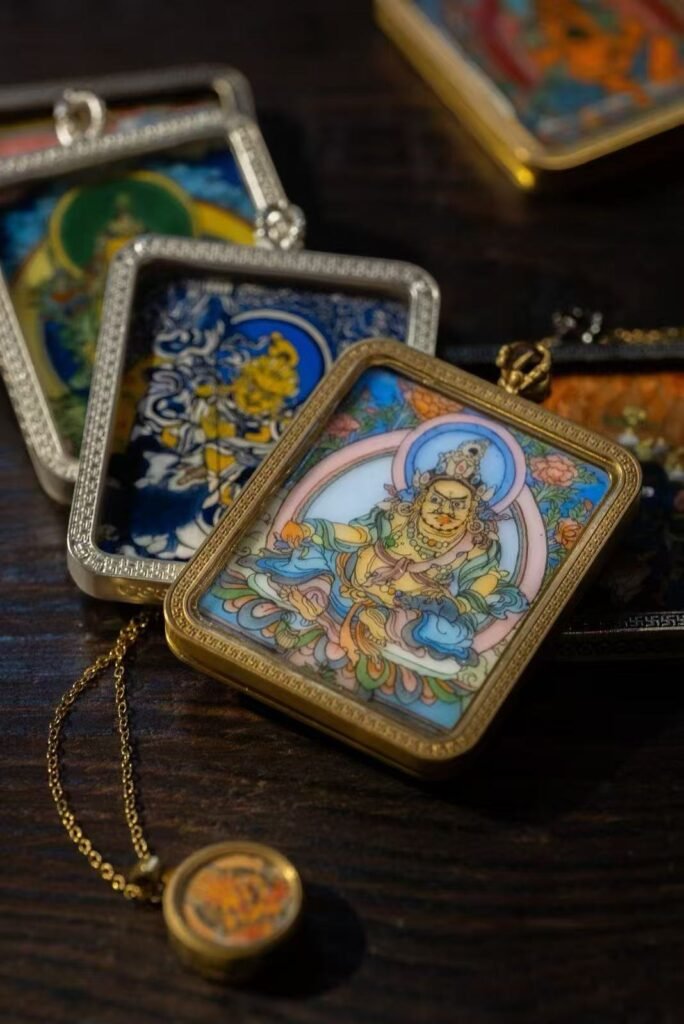
Copper-Plate Engraved Thangka (Copper Thangka / Metal Engraved Thangka)
Copper-plate Engraved Thangka is a traditional Tibetan metal-craft art that involves carving or embossing Thangka images onto copper plates. Skilled artisans use chisels, burins, and hammering techniques to create intricate lines, raised patterns, and richly textured surfaces.
The process typically combines repoussé (hammered relief) with fine line engraving, resulting in detailed depictions of Buddhist deities, protective symbols, and narrative scenes. After shaping and engraving, the surface may be gilded with gold or silver, inlaid with gemstones, or treated with patinas to enhance contrast and sacred presence.
Compared with painted Thangkas, Copper Thangkas are known for their high level of craftsmanship, durability, and ceremonial value. They are widely used in temples, monasteries, ritual contexts, and as collectible works of devotional art.